

How to Open and Close Jump Rings (and Which Pliers to Use)
You've finished a bracelet, worn it a couple of times, and now the jump rings are slipping open and links are going missing. It's tempting to blame the rings. Usually, though, the rings are fine. The problem is how they were opened and closed, and which pliers were used to do it.
Opening and closing jump rings is one of the first things anyone learns in jewellery making, and it's also where most beginner pieces go wrong. So here's how we'd do it, which pliers make it easier, and the habits that stop rings coming apart later.
Why jump rings fail
A jump ring is just a coil of wire cut into a circle. When you open it, you're bending the metal. Bend it the wrong way, or bend it too far, and the ring never sits properly closed again. You end up with a tiny gap, a slightly oval shape, or ends that don't quite meet, and that's the weak spot where a chain or charm will escape.
The most common mistake is pulling the ring apart sideways, so the ends move away from each other and the circle widens. It feels natural, but it stretches the ring out of shape and it's very hard to get it perfectly round again.
The right way: twist, don't pull
The method most jewellers use is the "twist" or "door" method. Think of the join in the ring as a door you're swinging open, not a gap you're stretching.
- Hold the ring with two pairs of pliers, one either side of the join, with the opening at the top.
- Push one hand away from you and bring the other towards you. The ends move front to back, and the ring keeps its round shape.
- Only open it as far as you need to slip on the next link or charm.
- To close, reverse the movement and bring the ends back level. Go slightly past centre and back again, and you'll often feel the ends "click" together.
Run a fingernail over the join when you're done. If you can feel an edge or a gap, twist it again until the ends sit flush.
Which pliers do you actually need?
You need two pairs, because you're holding the ring from both sides. They don't have to match, and plenty of people prefer one of each shape.
Chain nose pliers are the usual first choice. The tapered tips get into small rings and tight spots, which is handy when you're working on fine chain. For jump rings, go for smooth jaws rather than serrated ones. Serrated jaws grip well but leave little teeth marks in soft wire like silver and copper. Our smooth jaw chain nose precision pliers are a good everyday pair for this job.
Flat nose pliers give you a wider, flatter grip, so there's less chance of the ring twisting out of line while you work. They're especially useful on thicker wire or larger rings. If you're working with plated or coloured wire that marks easily, flat nose pliers with brass jaws are gentler on the surface than bare steel.

A popular pairing is chain nose in one hand and flat nose in the other. You get reach from one and a firm, steady hold from the other.
What about loop closing pliers?
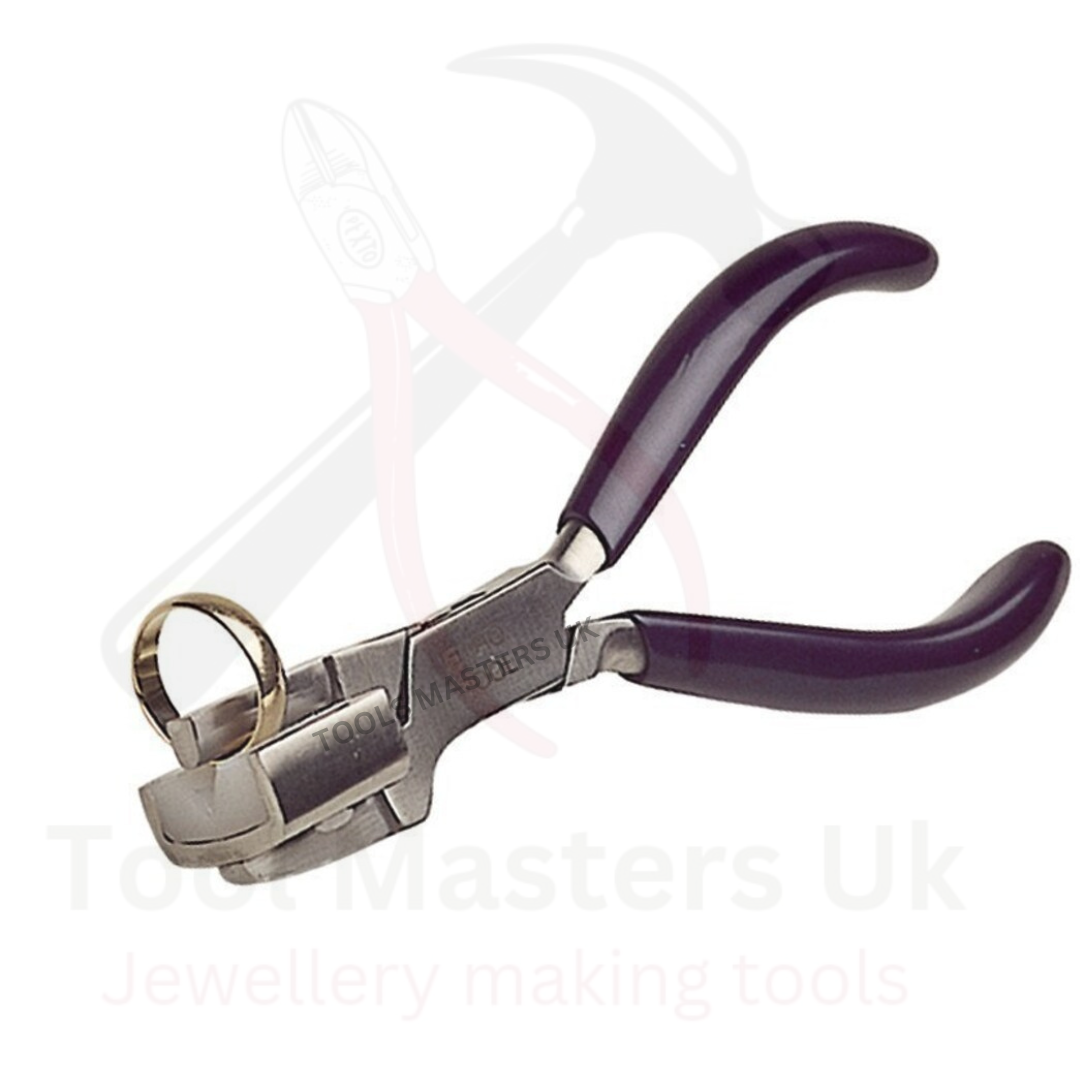
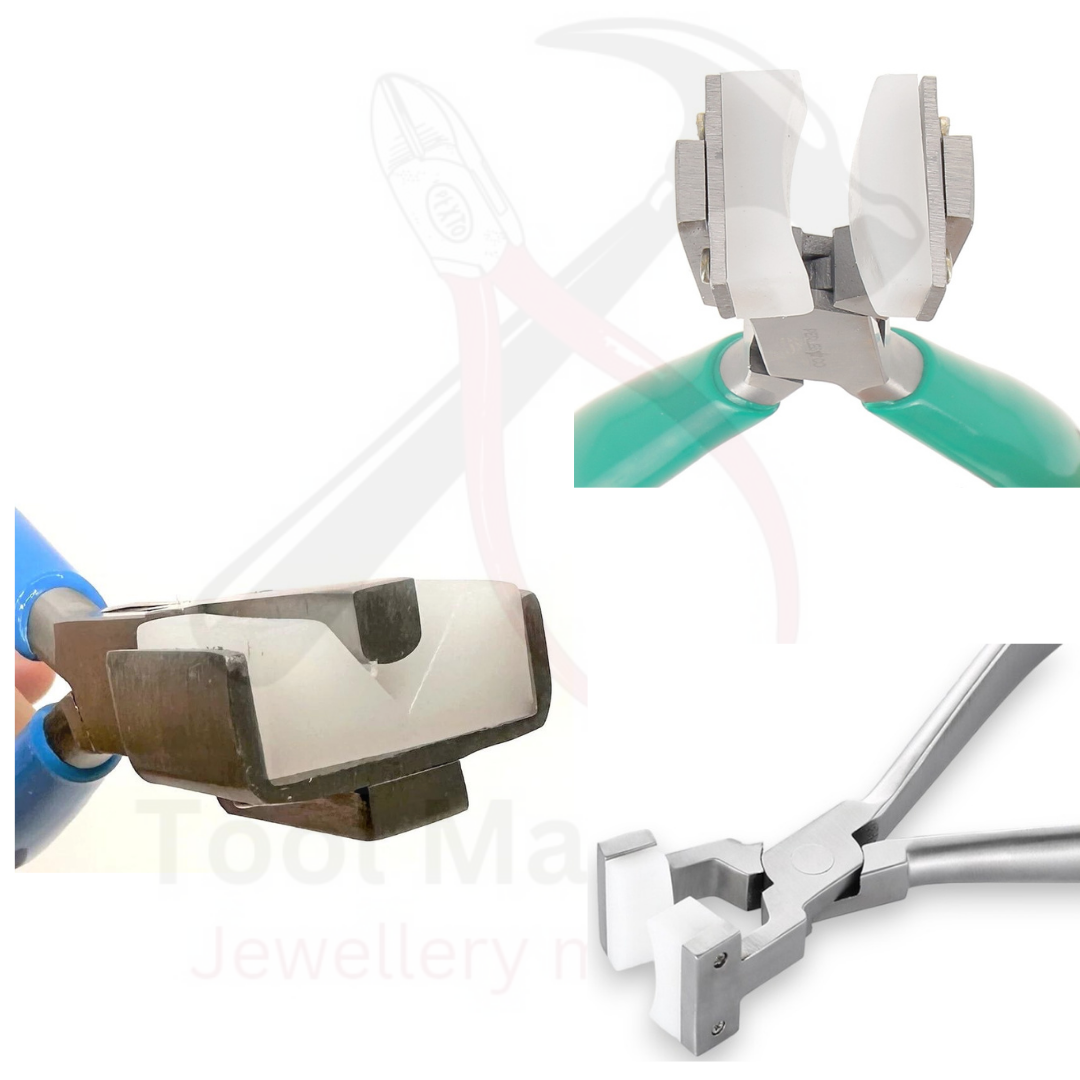
If you're closing a lot of rings, say for a chainmaille project or a long run of chain, specialist loop closing pliers are worth a look. They're shaped to hold a ring and press it closed neatly, which saves a bit of fiddling and helps keep your rings consistent. They don't replace a basic pair of chain or flat nose pliers, but they're a nice extra once you know you'll be doing plenty of rings.
Small habits that make a big difference
- Grip near the join, not halfway round the ring. You'll have far more control.
- Don't squeeze harder than you need to. Too much pressure flattens or marks the wire, even with smooth jaws.
- Never open and close the same ring over and over. Each bend work-hardens the metal and makes it more likely to snap. If a ring's been reworked a lot, swap it for a fresh one.
- Keep your jaws clean. A bit of grit or old glue on the jaws will scratch your work. A quick wipe with a soft cloth does the job.
- Check the cut ends. Some rings have one flat end and one pinched end from cutting. If the ends won't meet flush, a different ring may be the quickest fix.
Getting started
If you're putting together your first toolkit, a smooth jaw chain nose and a flat nose pair will cover jump rings and most basic wirework. Add round nose pliers when you start making your own loops, and you've got the core three that most jewellery makers reach for every day.
You'll find all of these, plus looping, bending and specialist pliers, in our Jewellery Making Pliers collection. If you're not sure which pair suits the wire or project you're working on, just get in touch. We're always happy to talk pliers.