

Smooth, Nylon or Brass Jaws? Choosing Parallel Action Pliers
A customer rang last month with a problem I hear a lot. She'd been making wire-wrapped rings with ordinary flat nose pliers, and every time she squeezed a piece of square wire, it slid out of the tip or ended up with little bite marks near the end. She wasn't doing anything wrong. Her pliers just weren't the right shape for the job.
That's where parallel action pliers come in. The tricky bit is that they come with different jaws, and picking the wrong ones can leave you with the same marks you were trying to avoid. So here's a plain guide to what's on offer and which one you actually need.
What makes parallel pliers different
Normal pliers pivot like scissors. The jaws open in a V, so when you close them on something thick, only the tips touch it first. That's why wire slips and why you get marks at one end.
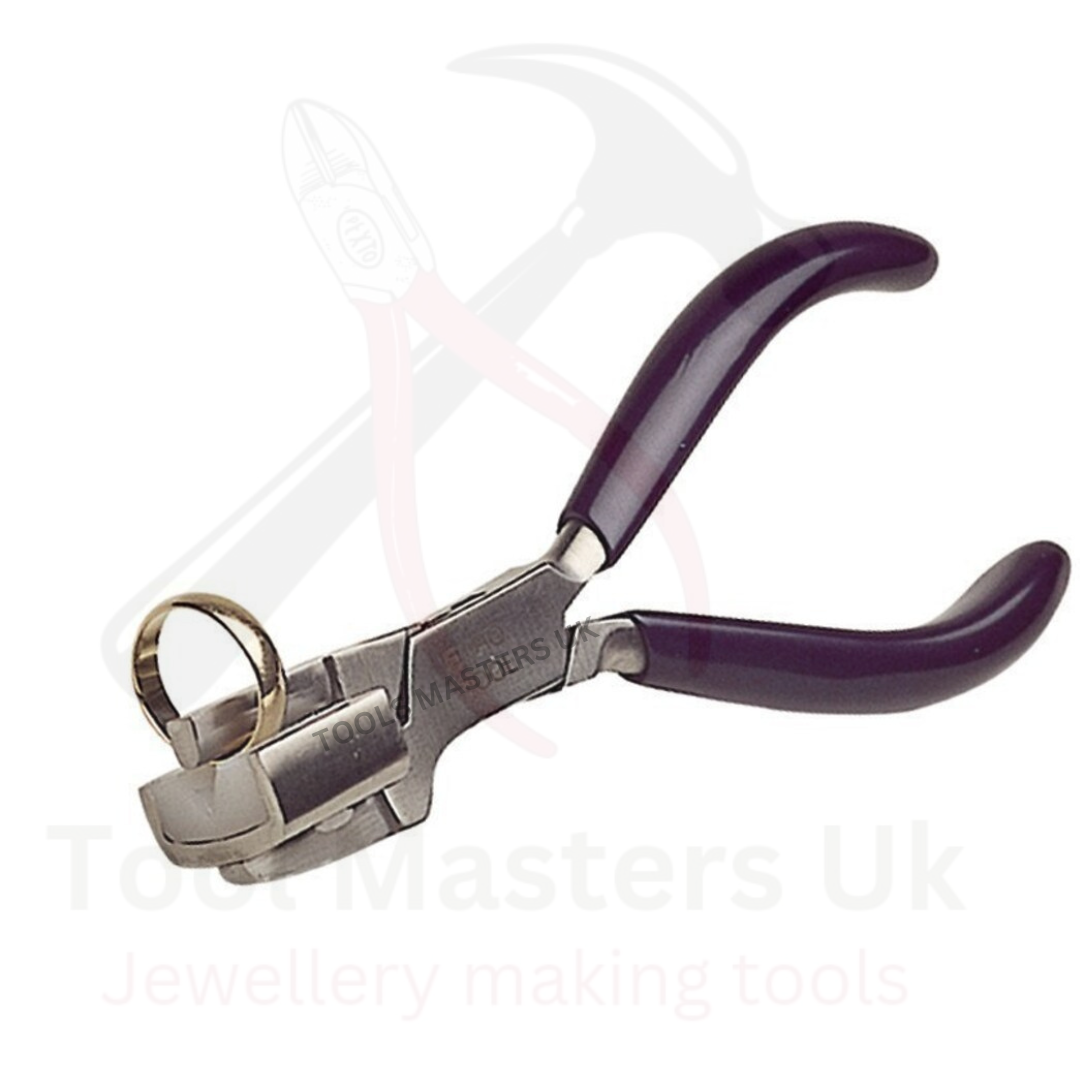
Parallel action pliers use a linkage instead of a single pivot, so the two jaws stay level with each other as they open and close. They meet your wire or sheet along their whole length. You get a firmer hold with less hand pressure, and the pressure is spread out rather than pinched into one spot.
They're especially handy for:
- Holding thicker wire or flat stock steady while you bend it
- Straightening kinked wire
- Flattening or squaring up small components
- Gripping sheet metal without it skating out of the jaws
Smooth steel jaws: the all-rounder
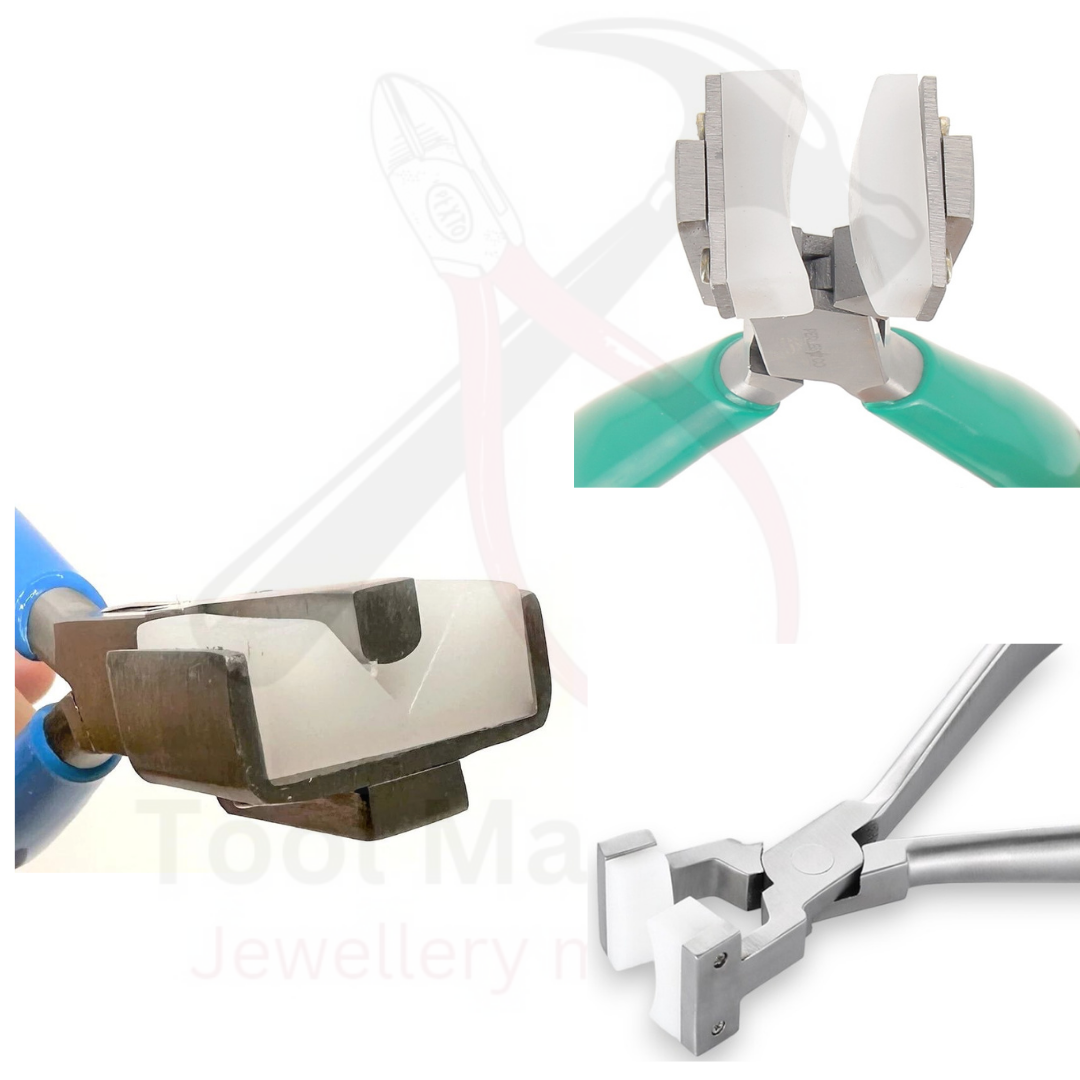
If you're only buying one pair, start here. Smooth, polished steel jaws give a strong, positive grip and won't leave the ridged marks you get from serrated pliers. They're good for bending wire, holding pieces while you file, and squeezing things flat.
Our 140mm parallel action flat nose pliers with smooth jaws are a sensible first pair. They've got a spring, so the jaws open by themselves and your hand doesn't tire as quickly on a long session. If you've got bigger hands or work with heavier stock, the 160mm version gives you a bit more length and leverage.
One thing to know: steel is harder than silver, copper and gold, so if you squeeze hard on soft wire you can still flatten or scuff it. For delicate or plated wire, look at the softer jaw options below.
Nylon jaws: for wire you don't want to mark
Nylon jaws are the ones to reach for when the finish matters most. Because nylon is much softer than metal, it grips without scratching, which is ideal for plated wire, coloured craft wire and anything already polished.
The classic trick with nylon jaw pliers is straightening wire. Close the jaws gently on the end of a kinked length and pull the wire through. Do it a couple of times and most of the bends come out, without the scuffing you'd get from steel.

The trade-off is that nylon doesn't grip as hard as steel and it wears over time, especially if you use it on sharp edges. Treat these as your finishing and straightening pliers rather than your heavy benders. Our 14cm adjustable nylon jaw parallel pliers are popular with jewellers and watch hobbyists for exactly this kind of careful work.
Brass jaws: somewhere in between
Brass sits in the middle. It's softer than steel, so it's kinder to precious metals, but firmer than nylon, so you get a more solid hold. A lot of people like brass for gripping finished pieces, holding settings while they work, or bending wire that's already been polished.
Have a look at our brass-lined parallel flat nose pliers, which also have an adjustable screw. That screw sets how far the jaws can close, which is useful when you want to hold something firmly without crushing it, or repeat the same squeeze on several pieces.
The specialist shapes
Once you've got a flat nose pair sorted, there are a few parallel pliers built for particular jobs:
- Round nose parallel pliers for making even loops and curves, like our 140mm round nose smooth jaw pair
- Zig-zag jaws for pressing a corrugated pattern into wire or strip
- Curved concave and convex jaws for shaping ring shanks and bracelets
You don't need these on day one. Buy them when a project calls for them.
Common mistakes to avoid
- Using nylon jaws to cut or crush. They'll dent and wear quickly. Keep them for gentle work.
- Squeezing too hard with steel jaws on soft wire. Let the parallel grip do the work. You need less force than you think.
- Forgetting a drop of oil. The linkage has more moving parts than ordinary pliers. A tiny drop of light oil now and then, wiped off afterwards, keeps them moving smoothly.
- Leaving them damp. Store them dry so the steel doesn't rust.
So which should you buy?
For most people, a smooth steel flat nose pair is the place to start. Add nylon jaws if you work with plated or coloured wire, or brass if you handle a lot of finished precious metal. If you'd rather have a few types to hand straight away, a set can work out better value than buying them one at a time.
You can see the full range in our Jewellery Parallel Pliers collection. And if you're not sure which pair suits what you're making, just get in touch. Tell us what you're working on and we'll point you in the right direction.